No lifting. No panic. Just dignity, safety, and speed. Introduction: The Problem with Transfers In…

Why the Rise in High Risk Evacuations Means Your Means of Escape Equipment Needs Reviewing Now
Practical insights for Facilities Managers
As the operational landscape for fire and emergency services evolves, building and facilities managers must keep pace. A recent government release reveals that for the year ending March 2025, the Fire and Rescue Services (FRSs) in England attended 603,942 incidents, an increase of 0.6% compared with the previous year and up 8.2% on five years ago.
Of particular note: the number of fires rose by 2.5% to 142,494.
What does this mean for your evacuation strategy?
Quite simply: the times when evacuation could be assumed to proceed smoothly are becoming less predictable.
Below we explore three key shifts and how they should prompt you to review your Means of Escape (MOE) equipment and evacuation procedures.
- More frequent and complex incidents
With incident numbers creeping up, fire and rescue services are under increasing pressure to respond. The average response time to primary fires in the year ending March 2025 was 9 minutes and 6 seconds – an increase of 3 seconds compared with the previous year.
That means your building’s evacuation systems must be robust, reliable and designed to cope with escalations in risk. If your evacuation equipment is outdated or under‑specified, there is less margin for error.
- Higher legal and reputational stakes
As the tempo of incidents increases, the consequences of evacuation failure grow. Organisations will face greater scrutiny over how they support those with mobility needs or other vulnerabilities. If your MOE equipment cannot deliver required performance – especially in stairwells, long corridors or during power disruption – the gap between policy and reality becomes a liability.
The Policy Problem: PEEPs Without Practicality
A well-written PEEP outlines:
- Who needs assistance
- How they’ll be evacuated
- Who is responsible for helping them
- What method or route will be used
But here’s the catch: without the right evacuation equipment, the plan becomes little more than a risk-mitigation exercise on paper.
We’ve seen plans that say:
- “Staff will assist the individual downstairs”
- “Manual handling will be used if necessary”
But when we visit the site, there’s no evacuation chair. No stair climber. No staff training. Just good intentions and a policy that won’t hold up under pressure.
The need for equipment matched to modern use‑cases
Many traditional evacuation chairs assume a manual carry or transfer out of a wheelchair. In an era of rising incident complexity, that approach is no longer acceptable. Safe, dignified, and swift evacuation demands equipment that:
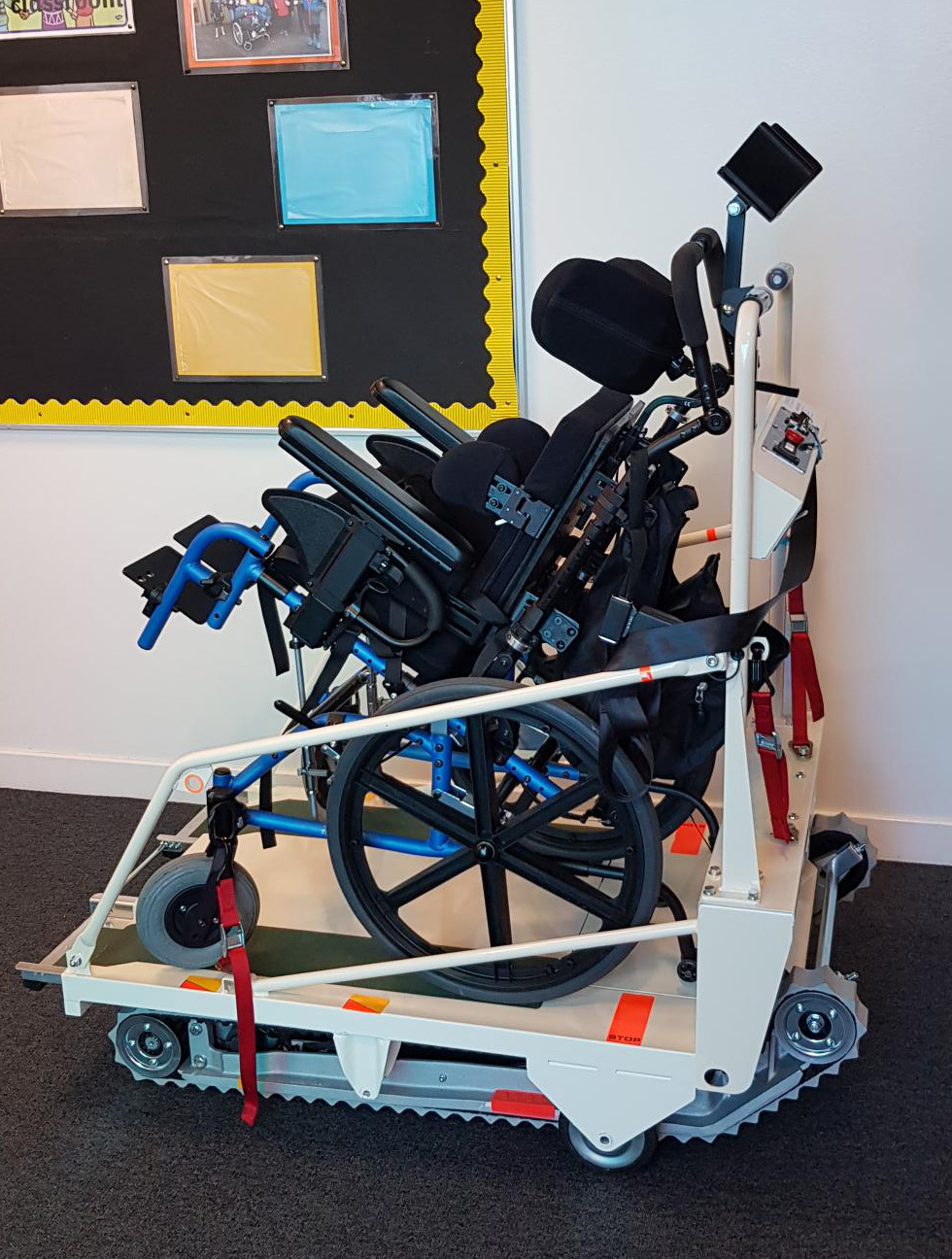
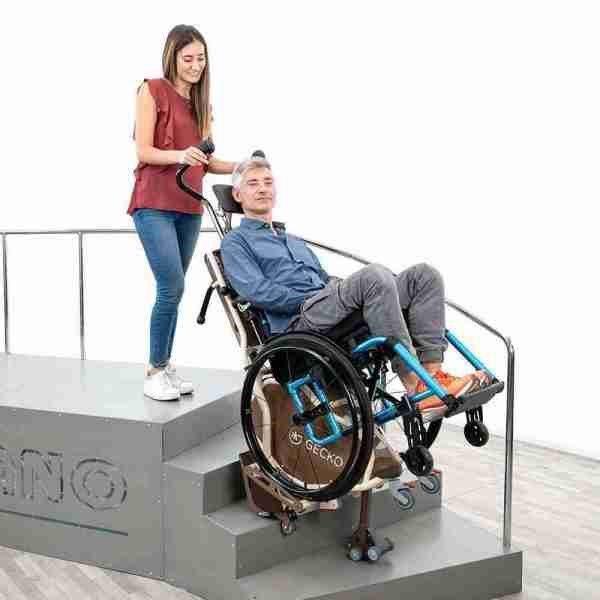
- allows users to remain in their own wheelchair (no transfer)
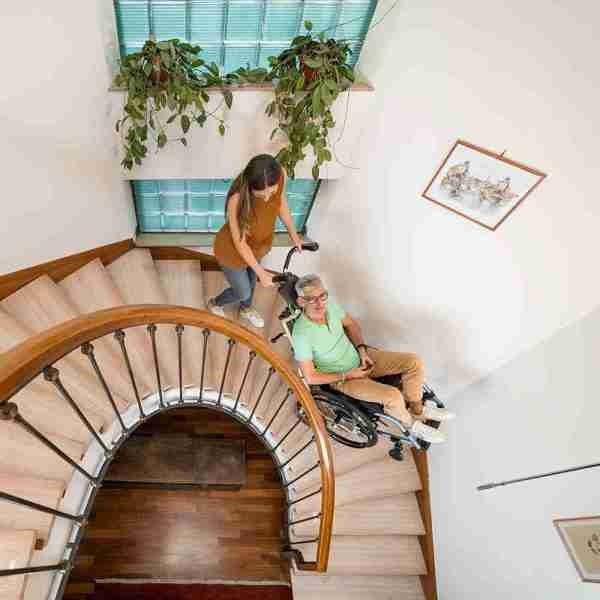
- is suited to your specific building layout (stairs, turns, landings)
- is compatible with limited staff or varied user profiles (temporarily impaired, mobility‑reduced, etc.)
At Evaccess, we support you with:
- Site‑specific evacuation audits: checking stairwell geometry, occupant profiles and evacuation routes
- Equipment selection and installation: for example, powered stair‑climbers and transfer‑free solutions
- Training and compliance: ensuring staff know how to use equipment under pressure
Action checklist for Facilities Managers
- Review your recent fire/evacuation incident history and response times.
- Check whether your current equipment would still perform under prolonged or complex evacuation scenarios.
- Ask whether your evacuation plan covers all mobility profiles – including wheelchair users, temporary injuries or those with fatigue.
- Schedule a full equipment and procedural audit now, not at the next fire‑drill.
The data from the year ending March 2025 signals subtle but important shifts in emergency response demand
For Facilities Managers the message is clear: investing in the right equipment and capability now is more than good practice – it’s safeguarding.
At Evaccess we’re ready to help you move from assumption to assurance and ensure your evacuation strategy stands up when it matters.
Featured Products from Evaccess
✅ The LG2004 T-Lift: A game-changer for wheelchair users, allowing for smooth stair evacuation without requiring physical lifting. This device enables a person to remain in their wheelchair, eliminating unnecessary transfers.
✅ The Gecko: A versatile evacuation chair capable of handling straight, spiral, and flared staircases. With anti-tilt technology and a 180kg weight capacity, it enhances safety and reduces strain on operators.
✅ The Super-Trac TRE-70: A powerful stair climber that transports individuals in wheelchairs over stairs – without requiring them to transfer from their chair.
Explore the full range of Evaccess products here: Evaccess.uk
The Evaccess Commitment
Beyond providing evacuation equipment, Evaccess is dedicated to supporting organisations in meeting modern safety and accessibility standards. The team offers expert guidance, compliance support, and hands-on training to ensure that evacuation plans are practical, effective, and legally compliant.
By partnering with Evaccess, organisations can take proactive steps to improve safeguarding measures – ensuring that everyone, regardless of ability, has a safe and dignified evacuation solution in an emergency.
The Evaccess Commitment
Beyond providing evacuation equipment, Evaccess is dedicated to supporting organisations in meeting modern safety and accessibility standards.
The team offers expert guidance, compliance support, and hands-on training to ensure that evacuation plans are practical, effective, and legally compliant.
Call us for advice and information. 0121 444 3690
Get in. Get Out. Together.
Related Posts