No lifting. No panic. Just dignity, safety, and speed. Introduction: The Problem with Transfers In…
What Happens in the First 3 Minutes of an Evacuation?
A practical, minute-by-minute breakdown of where most plans fall apart and how the right equipment & training makes the difference.
Introduction: When Every Second Counts
In any emergency, the first few minutes are everything. And yet, this is exactly where most evacuation plans begin to break down. When alarms sound, it’s not the policy document that leads the response- it’s the people on the ground, the clarity of the procedure, and the equipment available to execute it.
At Evaccess, we’ve observed hundreds of drills, audits, and real evacuations. What we’ve seen time and time again is that the first 180 seconds expose the real state of readiness. This article walks through those moments and highlights what Facilities Managers can do to turn confusion into control.
Minute 1: Confusion and Hesitation
The alarm sounds. People pause. They look around.
Staff who were “supposed” to know what to do aren’t sure whether it’s a drill. The responsibility is unclear. Evacuation roles haven’t been recently trained. Equipment is stored somewhere – but where?
This first minute is critical, and it’s where the tone is set. Unfortunately, this is also when hesitation leads to bottlenecks, breakdowns in leadership, and – most worryingly – abandonment of vulnerable occupants.
Why it fails:
- No clear delegation of responsibility
- Equipment is not visible or accessible
- Staff rely on assumption instead of training
How to fix it:
- Clear evacuation roles and responsibilities
- Regular, scenario-based training
- Accessible, ready-to-use equipment near key exits
Minute 2: The Mobility Gap Appears
Able-bodied occupants begin evacuating. But then the reality hits:
- A student in a wheelchair is stuck near the stairwell
- A visitor with crutches is unsure how to proceed
- A staff member with a temporary injury is panicking
This is the moment when the “buddy system” breaks down – if it ever existed. The equipment needed is either not fit for purpose, not available on the same floor, or too complex to use under stress.
Why it fails:
- No transfer-free evacuation options
- Evacuation chairs stored remotely
- Over-reliance on ad-hoc solutions like lifting or waiting
How to fix it:
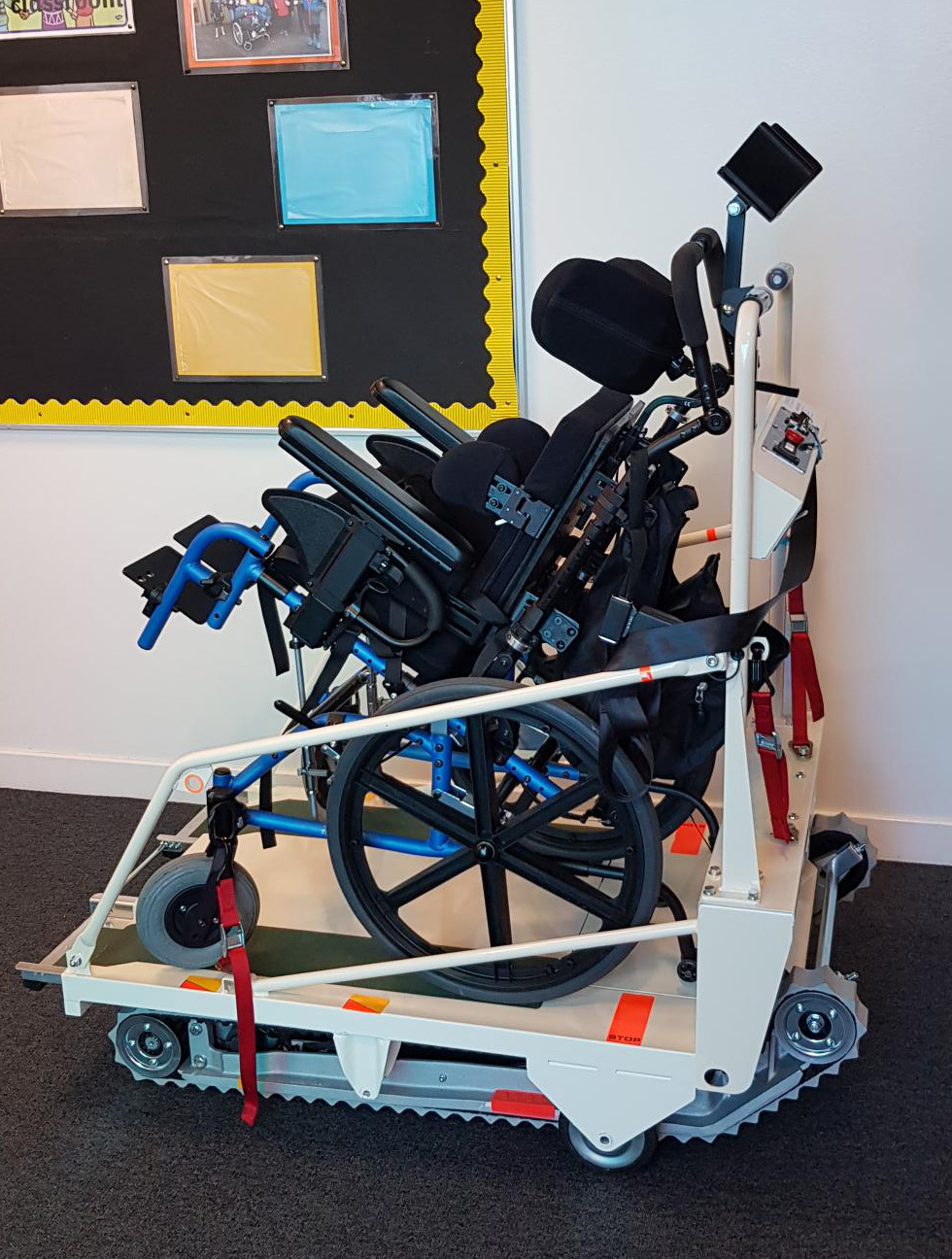
- Deploy transfer-free equipment like the Super-Trac TRE-70 or LG2004 T-Lift
- Ensure devices are stored on the right floor—close to where they’re needed
- Design evacuation plans that don’t require lifting, transferring, or improvisation
Minute 3: Risk Escalates
At this point, pressure builds.
The stairwells are filling. Staff start making unsafe decisions – trying to lift someone, dragging a chair, or delaying evacuation entirely. In many cases, vulnerable individuals are told to wait until “help arrives.”
But if a fire spreads, if smoke thickens, or if building systems fail, this is where tragedies unfold.
Why it fails:
- Staff panic due to lack of hands-on experience
- Equipment is hard to use under pressure
- People are left behind because the plan assumed best-case scenarios
How to fix it:
- Provide regular training in live settings (not just theory)
- Use powered, easy-to-use evacuation equipment
- Simulate stress-tested drills with reduced staff to reflect reality
Evaccess: Preparing You for the First 3 Minutes and Beyond
We help organisations turn those first three minutes from chaos into coordinated action.
Our approach includes:
- On-site evacuation audits tailored to your building and staff
- Transfer-free equipment designed for real-world scenarios
- Training programs that build muscle memory and team confidence
- Documentation and compliance support for legal peace of mind
Facilities Manager Action Checklist
- When was the last time your team ran a full-scale drill involving mobility-impaired individuals?
- Do you have transfer-free evacuation equipment located on every necessary floor?
- Could a new staff member walk into the building today and understand what to do in an emergency?
If the answer to any of those is “I’m not sure” now is the time to act.
Featured Products from Evaccess
Super-Trac TRE-70
A powered stair climber that allows individuals to remain in their wheelchair while being safely evacuated down stairs.
- ✅ No transfer required
- ✅ Supports high weight capacity
- ✅ Ideal for complex staircases
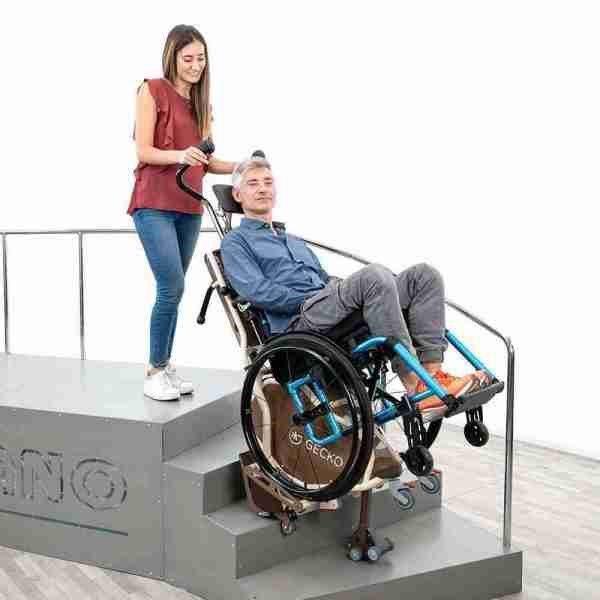
LG2004 T-Lift
A secure and intuitive system that moves a wheelchair user up or down stairs with no lifting or tilting.
- ✅ Ultra-stable
- ✅ One-operator capable
- ✅ Compact and practical for education, healthcare, and offices
Super-Trac TRE-52
A portable powered wheelchair evacuation platform and stair climber – compatible with both powered and manual wheelchairs.
- ✅ Supports up to 200kg (including bariatric users)
- ✅ Large platform accommodates most wheelchair types, including powered chairs
- ✅ Suitable for indoor and outdoor staircases
- ✅ Portable and installation-free – ideal for multi-building sites or historic properties
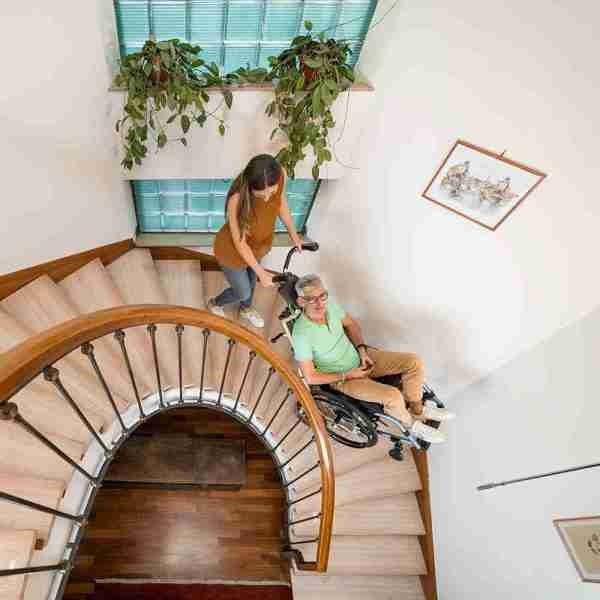
Stairmate SA-S Powered Stair Climber
A compact, battery-powered stair climber designed to attach to most manual wheelchairs, enabling safe travel up or down stairs without transfers.
- ✅ Short wheelbase — ideal for tight or narrow staircases
- ✅ Simple single-operator controls
- ✅ Suitable for indoor and outdoor use
- ✅ Excellent solution for manual wheelchair users without needing a full platform system
Stairmate SA-3 Powered Stair Climber
A robust stair climber for manual wheelchairs, suited to residential, commercial, and public-building environments.
- ✅ Motorised assistance removes the need for manual lifting
- ✅ Versatile fit for wider wheelchairs and heavier users
- ✅ Reliable braking and safety features for controlled operation
- ✅ More cost-effective than installing a lift, with no building modifications required
Explore the full range of Evaccess products here: Evaccess.uk
The Evaccess Commitment
Beyond providing evacuation equipment, Evaccess is dedicated to supporting organisations in meeting modern safety and accessibility standards. The team offers expert guidance, compliance support, and hands-on training to ensure that evacuation plans are practical, effective, and legally compliant.
By partnering with Evaccess, organisations can take proactive steps to improve safeguarding measures – ensuring that everyone, regardless of ability, has a safe and dignified evacuation solution in an emergency.
The Evaccess Commitment
Beyond providing evacuation equipment, Evaccess is dedicated to supporting organisations in meeting modern safety and accessibility standards.
The team offers expert guidance, compliance support, and hands-on training to ensure that evacuation plans are practical, effective, and legally compliant.
Call us for advice and information. 0121 444 3690
Get in. Get Out. Together.
Related Posts